


Why Regular Blood Testing Matters During Peptide Use
CROIX WELLNESS | RESEARCH & EDUCATION
Understanding laboratory monitoring, metabolic health, hormone regulation, and the limitations of peptide safety research.
Peptide therapies are increasingly discussed in the context of metabolic health, body composition, hormone signaling, recovery, and longevity. However, peptides are not a single category of treatment with a uniform safety profile. Some are FDA-approved medications supported by extensive clinical trials. Others remain investigational, with limited human safety data.
One of the most important considerations for anyone receiving peptide-based treatment is appropriate laboratory monitoring.
Blood testing can help clinicians establish a baseline, identify changes in metabolic or hormonal function, detect certain adverse effects, and determine whether treatment requires reassessment.
The central principle is simple: feeling well does not necessarily mean every relevant biological marker is within a healthy range.
However, blood testing has limits. Normal results cannot establish that an investigational peptide is safe, that an injectable product is sterile, or that long-term risks are absent.
1. Why baseline testing matters
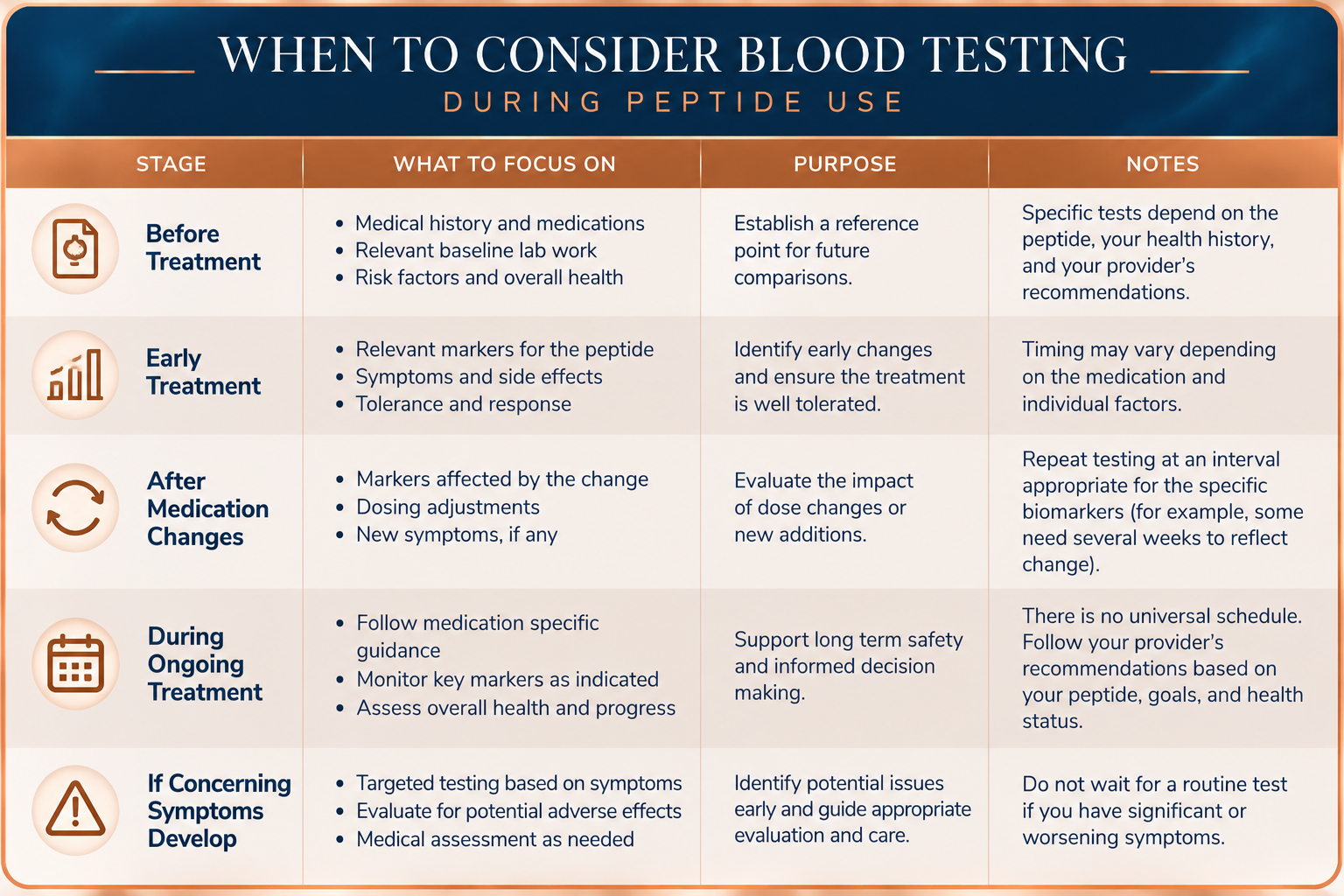
Before starting a peptide-based treatment, baseline laboratory results provide a reference point for future comparisons.
For example, an elevated blood glucose measurement discovered several months into treatment may represent a preexisting condition, a medication-related change, or another health issue. Without baseline information, determining the cause becomes more difficult.
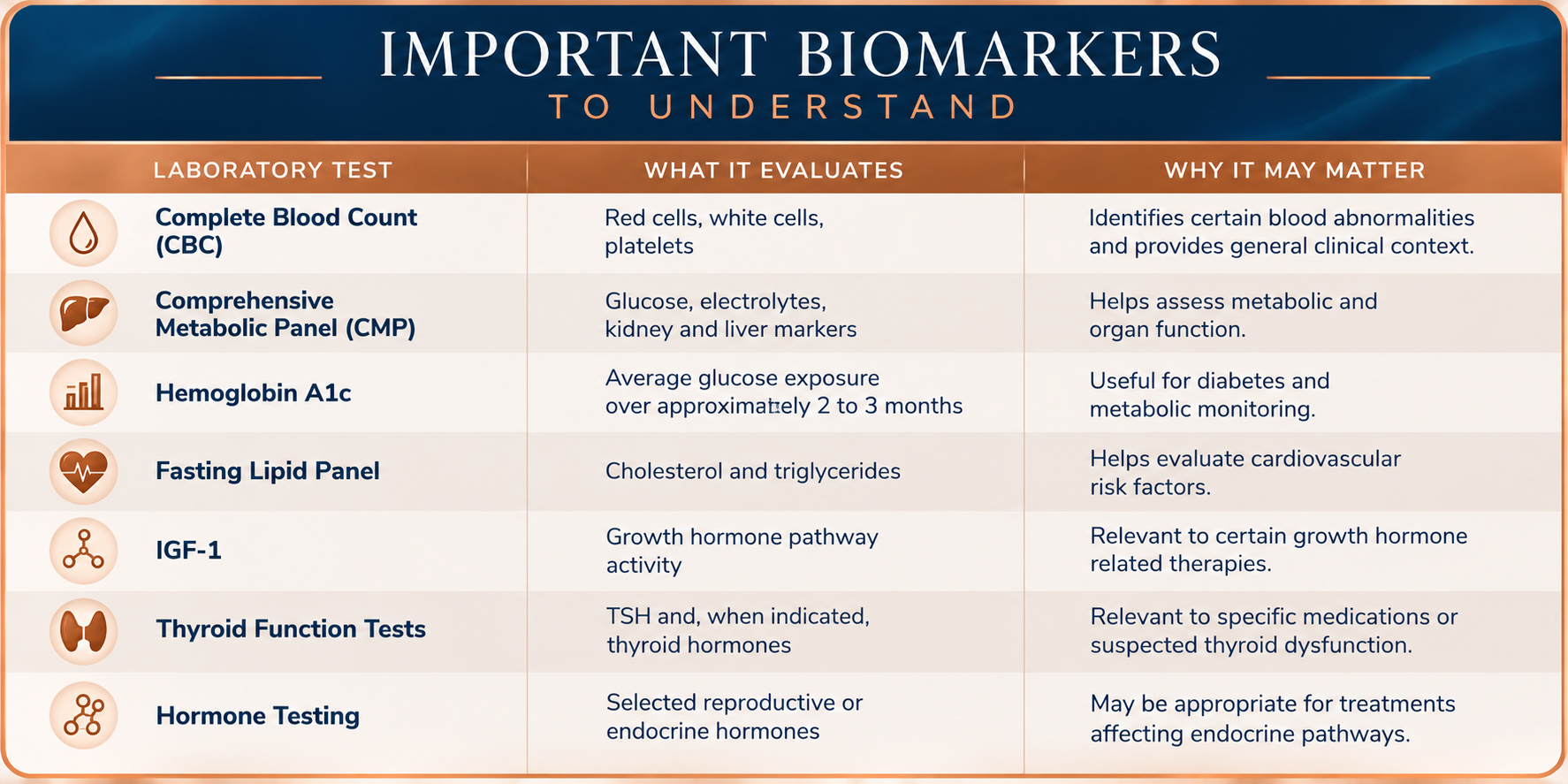
Depending on the compound, medical history, and treatment indication, a clinician may consider evaluating:
Glucose regulation and metabolic health
Kidney and liver function
Lipid levels and cardiovascular risk
Hormonal activity, when relevant
Complete blood count and other condition-specific markers
Not every patient requires every test. The appropriate monitoring strategy depends on the medication and the individual.
2. Important biomarkers to understand
3. Monitoring depends on the peptide
GLP-1 and related metabolic medications
Medications such as semaglutide and tirzepatide affect glucose regulation, appetite, and gastrointestinal function. Monitoring may include glycemic control, weight trends, hydration status, kidney function when clinically indicated, and medication tolerability.
Patients taking insulin or sulfonylureas may require closer glucose monitoring because of hypoglycemia risk.
Significant vomiting or dehydration can contribute to acute kidney injury. Severe, persistent abdominal pain requires medical evaluation for possible pancreatitis or other serious conditions.
Blood tests alone do not rule out gallbladder disease, pancreatitis, or other complications.
Growth hormone–related peptides
Compounds that stimulate growth hormone signaling can affect the GH–IGF-1 pathway.
For FDA-approved tesamorelin, prescribing information recommends monitoring IGF-1 and glucose because of potential IGF-1 elevation and glucose intolerance or diabetes.
For investigational compounds such as CJC-1295 and ipamorelin, evidence is insufficient to establish that a particular laboratory panel or testing interval makes long-term use safe.
Investigational recovery and longevity peptides
Compounds such as BPC-157, TB-500, MOTS-c, and epithalon have limited or insufficient high-quality human safety evidence for many marketed applications.
Routine laboratory testing cannot compensate for the absence of validated dosing, long-term safety data, or reliable adverse-event estimates.
This is particularly important when multiple investigational compounds are used together, because their combined effects may not have been studied.
4. What the research shows
The importance of laboratory monitoring is supported by specific clinical findings, particularly for FDA-approved medications.
Tesamorelin and elevated IGF-1
In clinical trials described in the EGRIFTA WR prescribing information, 36% of tesamorelin-treated patients had IGF-1 levels more than three standard deviation scores above the age-adjusted reference mean at 26 weeks. This illustrates why IGF-1 monitoring is specifically recommended during this therapy.
Tesamorelin and glucose regulation
In tesamorelin trials, 5% of treated patients versus 1% of placebo recipients developed an HbA1c of at least 6.5% by week 26. The prescribing information recommends evaluating glucose before treatment and periodically afterward.
Semaglutide and kidney function
Semaglutide labeling describes acute kidney injury associated with dehydration from gastrointestinal adverse effects. Kidney function monitoring is recommended in patients experiencing adverse reactions that could cause volume depletion.
These examples demonstrate an important distinction: laboratory monitoring recommendations should be based on the known risks of a specific medication, not applied indiscriminately to all peptides.
5. How often should blood testing be performed?
6. Blood testing versus product testing
Two different forms of testing are relevant to peptide safety, and they should not be confused.
Blood testing evaluates aspects of a person's health, including metabolic and endocrine function.
Product testing evaluates characteristics of a submitted compound sample, such as identity, purity, quantity, or microbial contamination, depending on the tests performed.
A Certificate of Analysis (COA) may provide useful analytical information about a product sample. However, a purity result does not establish sterility, and neither product testing nor routine blood testing proves that an investigational compound is safe for human use.
The FDA has specifically identified safety concerns and significant gaps in human safety information for several investigational peptides, including BPC-157, ipamorelin, and MOTS-c.
FDA
7. When symptoms matter more than scheduled testing
Certain symptoms require medical attention regardless of when laboratory testing was last performed.
These include severe or persistent abdominal pain, repeated vomiting with inability to maintain hydration, signs of serious allergic reactions, chest pain, fainting, or rapidly worsening swelling.
A normal recent blood test should never be used as a reason to ignore concerning symptoms.
Conclusion: Monitoring is part of responsible treatment
Regular, clinically appropriate blood testing can provide valuable information during certain peptide-based treatments. It can establish a baseline, identify meaningful physiological changes, and support informed medical decisions.
But laboratory monitoring is only one component of safety.
Medication approval status, quality of clinical evidence, contraindications, product quality, adverse-effect surveillance, and professional medical supervision all remain essential considerations.
For FDA-approved peptide medications, monitoring should follow the prescribing information and the treating clinician's assessment. For investigational peptides, no amount of routine blood testing can replace missing human safety research.
The goal is not simply to collect more laboratory results. It is to understand which measurements matter, why they matter, and how they should influence clinical care.
Scientific references
FDA prescribing information: EGRIFTA WR (tesamorelin). Monitoring of IGF-1, glucose, and relevant adverse effects.
FDA prescribing information: WEGOVY (semaglutide). Kidney injury, hypoglycemia, pancreatitis, and gallbladder warnings.
FDA prescribing information: ZEPBOUND (tirzepatide). Glucose monitoring and hypoglycemia risk.
FDA: Bulk Drug Substances That May Present Significant Safety Risks. Investigational peptide safety concerns and evidence gaps.
Croix Wellness Research & Education | October 2026 Educational information only. This article does not constitute medical advice, establish a testing protocol, or endorse the human use of unapproved research compounds. Laboratory testing and treatment decisions should be individualized by a qualified healthcare professional.